Od Jana Novotná / pro, 8 2025
Jak vzniká kaz pod plombou a jak mu předcházet
Kaz pod plombou vzniká tichým procesem, který může probíhat měsíce bez příznaků. Zjistěte, jak se to děje, proč se to stává a jak mu efektivně předcházet.
ukázat více
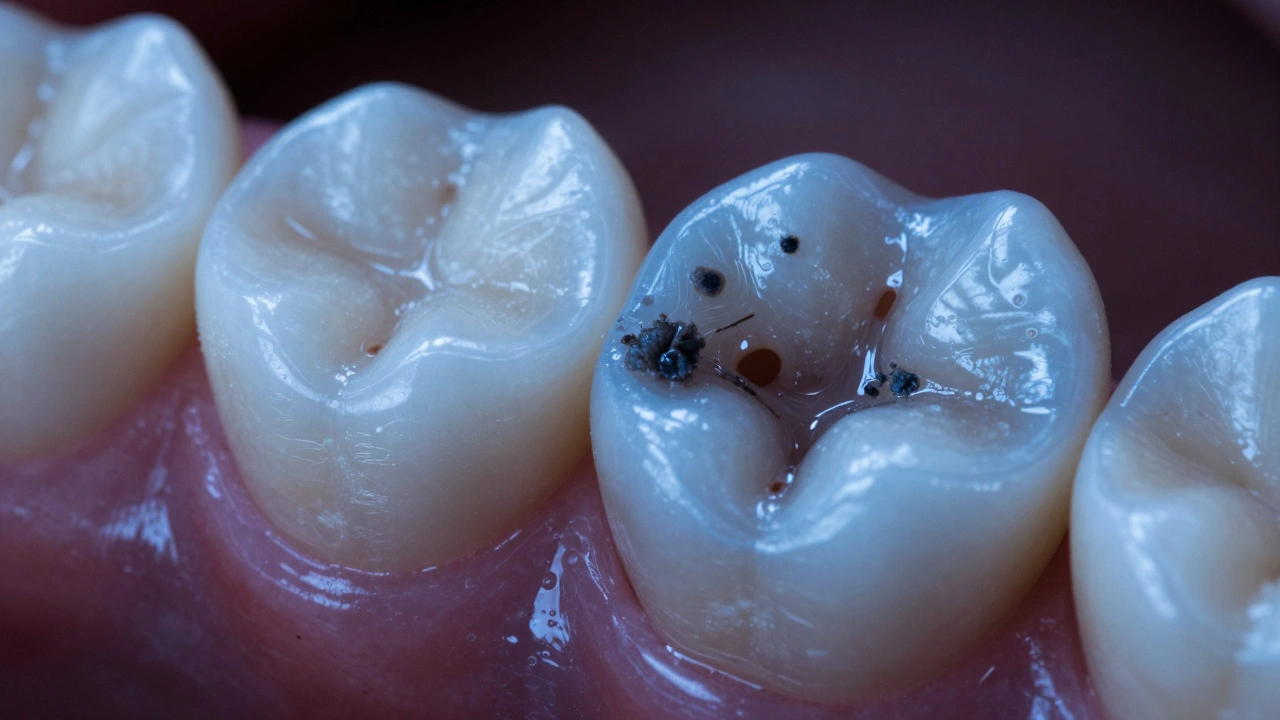
When you feel pain in a tooth that already has a filling, it’s not just bad luck—it’s a sign that something went wrong under the surface. A kaz pod plombou, kariés, který se vyvinul pod zubní výplní a nebyl úplně odstraněn při výplni. Also known as sekundární kariés, it happens when bacteria sneak in through tiny gaps, decay spreads under the filling, and the tooth starts sending warning signals. This isn’t rare. Many people think a filling is a permanent fix, but it’s more like a patch—it can wear, crack, or loosen over time, letting plaque and acid in. And once the decay hides under the filling, you won’t see it. You’ll only feel it: a dull ache, sensitivity to cold or sweet, or sudden sharp pain when biting down.
That’s why zubní výplň, plomba, která slouží k obnově poškozeného zubu po odstranění kariézu isn’t the end of the story. It’s the beginning of ongoing care. If the filling wasn’t placed perfectly—if there’s a micro-gap, or if the tooth was already deeply damaged—the decay can keep growing quietly. Over months, it reaches the nerve. That’s when the pain becomes constant, and you might need a root canal, or worse. A infekce zubní dřeně, zánět vnitřní části zubu, který vzniká, když bakterie proniknou až k nervu doesn’t always come with swelling or fever. Sometimes, it just feels like a tooth that won’t quit hurting—even if the filling looks fine.
And here’s the thing: you can’t fix this at home. Brushing harder, using mouthwash, or trying baking soda won’t reach what’s hiding under the filling. Only a dentist can spot it—with an X-ray, a probe, and experience. If you’ve had a filling and now your tooth reacts to cold, feels tender when chewing, or just doesn’t feel right, don’t wait. The longer you delay, the more the decay spreads. What started as a small repair could turn into a root canal, a crown, or even extraction.
That’s why the posts below cover everything you need to know. From why a tooth hurts after a filling, to how to tell if it’s just sensitivity or something deeper. You’ll find out how dentists detect hidden decay, what materials are best for long-lasting fillings, and why some fillings fail while others last decades. You’ll also learn how to spot early signs before the pain gets bad—and how to prevent it from ever happening again. This isn’t about fear. It’s about knowing what to watch for, so you don’t end up in more pain than you need to.
Od Jana Novotná / pro, 8 2025
Kaz pod plombou vzniká tichým procesem, který může probíhat měsíce bez příznaků. Zjistěte, jak se to děje, proč se to stává a jak mu efektivně předcházet.
ukázat více